
The Stressor: A Brief Introduction and Detailing

Updated: Sep 21
So we have horror, and thrillers, but what about a stressor? I don't believe I am the only one who has been noticing this, but there has been a sort of new age of releases that walk this line between Drama and Horror. I will list a few, but link to a Letterboxd list I have made.
Marty Supreme directed by Josh Safdie
Uncut Gems and Good Time directed by Josh and Benny Safdie
Shiva Baby directed by Emma Seligman
Red Rocket directed by Sean Baker
No Other Choice directed by Park Chan-wook
Boiling Point directed by Philip Barantini
The Line directed by Ethan Berger
Whiplash directed by Damien Chazelle
The Drama directed by Kristoffer Borgli
Emily the Criminal directed by John Patton Ford
The thing is these movies are not horror because they don't have any of the conventional tropes that horror has. There is no typical monster besides their own actions and karmic justice. But these movies feel different. You are often on the edge of your seat, or hiding your face, like you would for a horror movie...but it's not. Spoiler Warning for Marty Supreme, The Drama, and Boiling Point.

I think this new "genre," if I can be so bold as to call it that, still fits in the body genre. A body genre, is described by one it's originators, Richard Dyer in the quote, "The fact that porn, like weepies, thrillers and low comedy, is realized in/through the body has given it low status in our culture. Popularity these genres have, but arbiters of cultural status still tend to value "spiritual" over "bodily" qualities, and hence relegate porn and the rest to an inferior cultural position."" The four/five genres defined as body genres now are: horror/thriller with the result being fear responses, melodrama with the result being tears, comedy with the result being laughter, and porn with the result being arousal.
I would say these films create the feeling of cringe and stress unlike horror and thriller. Yes, when I watched Marty Supreme, I was afraid the dog would die. BUT I was not afraid in the way that a brain-eating zombie makes me afraid. To reference my Professor from my horror movie class, and horror expert/scholar (though self-identifies as a horror junkie), Dr. Darren Hick, he described that there are different flavors of fear both in class and in his article "Your Zombie and You." I wouldn't say this is a fear of bodily harm, particularly resulting in death, but fear of consequences. In The Drama, my major fear was not Emma killing someone, despite her history, I was afraid of Charlie's actions and the secret being revealed.
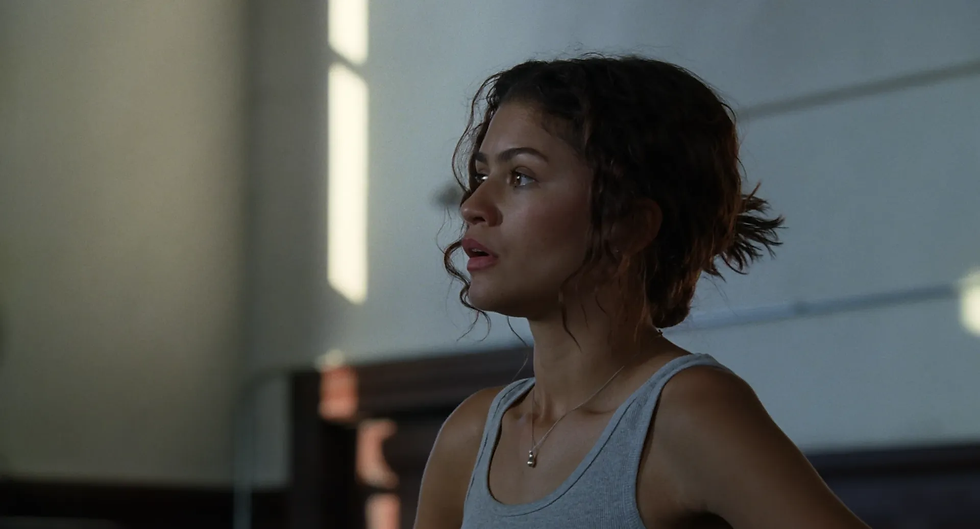
A show I love is considered a cringe comedy, Never Have I Ever, creates the same emotional response as these movies because of the stress and "cringe." I hid my face, particularly when secrets were exposed, or wrong decisions were made. I think this fear often results from our self-insertion into the main character in the media. A lot of people associated main character with good guy, and these movies are often not that. They are bad, flawed people. We hold out hope for them to make the right decision, inevitably knowing they will not.
It doesn't necessarily make you laugh. It doesn't necessarily make you afraid. But it does make you stressed and all of symptoms that come with that sensation. I don't know the physiology and psychology behind all of it, but I'm chemically sure there is a lot of overlap between the physical responses to horror and a stressor.

I will say a flaw I am noticing with these films is that so far they revolve around arrogant white men making poor decisions. I do understand why though because, no offense, but that is the demographic that logically makes sense for this kind of feature. It is a privilege to be cocky, and the most privileged groups are more likely to fit that bill. In my humble opinion, it wouldn't be an interesting film if it was a sad and passive, yet mean person who is facing this downward spiral, although you might be able to argue that for Charlie from The Drama. But the premise is what made it more interesting.
Quick tangent on The Drama and trigger warning for sexual assault, but I need to discuss this. When Charlie cheats. the internet makes/made it out significantly worse than it is. I'm not saying cheating is okay, but what I am saying is that Charlie gets sexually assaulted. He consented to the kiss and gives the kiss to Misha, but really was not in an emotional place to consent in the first place. She should have immediately pushed him away. Misha knew that he was in a bad mental place and continue on, blatantly ignoring all of Charlie's body language. He wasn't exploring some sexual chemistry between them near the end of it, he was a victim. Now that that's out of the way, back to the conversation at hand.

Why Is It Good to Differentiate These Movies from Comedy, Horror, and Thriller?
Some people consider The Drama a comedy. It has funny moments. It isn't really a comedy. Dark comedy maybe. But also, Uncut Gems isn't really fucking funny. But it IS stressful. You laugh through the pain in these movies, not throughout the movie. Not every comedy will have you laughing the entire time, but most comedies goals are to relieve stress, not increase it.
As I said earlier, horror is just a different. Even when the killer is human there are still some non-human abilities whether intentional or not. In Halloween, Michael Myers simply refuses to die and is strong in a very specific inhuman way. He, to many people, is an it rather than a man.

As for the thriller comparison, I feel like these films are reliant on the drama to induce the stress emotion. Thrillers are reliant on suspense for their emotional response, and I wouldn't say that isn't the experience when watching these movies, but it's not the full picture. These movies are comedies of errors. Thrillers like Se7en or Memento, you still connect with the main character at first. You follow along the film with them. You are as knowledgeable as the protagonist, whereas in stressors, you know more.
When you are in suspense in Boiling Point, you have already seen and heard a character discuss their food allergy. That information is fed to you. As you watch the movie and understand what type of film this is you can anticipate an allergic reaction Chekhov's gun will go off, but it's a matter of when. Same thing goes with Shiva Baby, when you are watching Danielle with her sugar daddy Max, you understand that information will be important later. Everything is shown for a reason. That isn't saying a stressor is better, or a thriller is worse. They are just different.

Why Are Stressors Happening Now?
The Internet and Cancel Culture. The stress to constantly be perfect in an age where every action can be scrutinized and watching a film about "wrong" actions parallel each other. No, you the average person are not as big of a dick as Marty Mauser, but you worry you are with the panopticon of technology. Are you being recorded right now? You could be. Better behave right. What if you did post something problematic? Oh, it was 12 years ago. Still wrong, etc.
That rhetoric directly led to these movies emphasizing the biggest fuck ups. Maybe it is to make people realize the average person ain't so bad? Maybe it is to make us feel better, or worse about greater society? Ourselves? But there's not better/worse/more popular time to discuss the morality of a person than now when all of the information is hypothetically at our fingertips.

Conclusions
I coined this now, so no one would get to it before me both for selfish reasons (fitting for the topic of selfish characters) and pure conversation. I love these types of movies, despite how they make me feel. I think it is important and interesting to make more. It makes us reflect on our innermost, worst selves and where we draw moral lines in the sand.
These films are different from horror, thriller, and comedy. They serve a different purpose and are for a more "socially conscious" (although failing) time, where mistakes are put on blast. You cover your face and hide from these character's actions because of stress, not fear. This makes me wonder is a fear of being "canceled" more a fear of social isolation? These movies undergo characters who most of the time end up utterly alone. Is this what we are afraid of? Again, I don't have the answers for all physical differences between this stress and horror movie stress, but I hope you can see this has the potential to be a big, beautiful, anxiety-inducing genre.


Comments